Everything below describes CrashKit as it stands in October 2026. Where something isn't built, it says so.
Why a store would bother
- It fits the F&I box. One QR code in the folder. No account for the customer to make, nothing for the store to sign, and nothing arrives in your systems on its own.
- Your customer handles their own worst day better. The app walks them through the eight photographs that stop a re-inspection: the wide scene, both plates, both VINs, the damage close and mid on each vehicle, the other driver's insurance card, and the road itself.
- It shortens the front end of the claim. The gap this closes is between the crash and an adjuster being assigned — the other driver's carrier and policy number, the report number and the agency, captured at the scene instead of chased for a week. It does not authorise a repair; a claim number and an approved estimate still do that.
- It costs nothing. Free to the customer, free to the store. No per-store fee, no per-user fee, no revenue share, nothing to invoice.
Straight answers, before you ask
"Does it send my customer to someone else's body shop?"
Today the app shows nearby businesses from public map data (OpenStreetMap — the open map source many apps use), sorted by distance from where the customer is standing. Nobody pays to be there and nothing is ranked or recommended by us. Your shop appears if it's nearby and listed, like everyone else's — but distance-sorted means the independent two blocks from the crash sits above your store twenty miles away. If map data isn't available, the app hands the search to the customer's own Maps app, and those results are ordered by Google, not by us.
It does not favor your store either — the app does not pin your body shop, your roadside number or your name. Nothing on this page is a commitment to deliver a feature. We'd rather tell you that than imply it works that way.
"Does it point my customer at a lawyer?"
Yes, and you should hear it here rather than from your GM. Alongside hospitals, tow trucks and repair shops, the app has a "find an attorney" list. Today it's the same distance-sorted public map data as everything else: no firm pays us, no firm is recommended, and no lawyer is put in front of anyone during the safety steps at the start.
If that ever becomes paid placement, you'll be told in writing before it goes live and it will be labelled as advertising. If your store would rather not hand out something containing that list, say so now rather than after.
"What can I hand out today?"
Android only, while the Play Store listing is prepared. There's no application to fill in — email us and we send the install link back. There is no iPhone version yet. If half your customers are on iPhone — and they are — that's a real limit, and it's the honest reason to start with a pilot rather than 400 folders.
"What happens to my customer's data?"
It stays on their phone. There's no account and no server of ours holding it, so nothing arrives in your systems on its own, and there's nothing for anyone to request from us.
Where that ends — and we'd rather say it than have your compliance officer find it: if a customer chooses to email you their packet, you are holding it. That includes the other driver's name, insurer and policy number. Your own data-handling rules apply to it, exactly as they would to any photo a customer emails your service drive. We're not telling you that you have nothing to protect. We're telling you nothing lands with you unless your customer sends it.
The two exceptions on our side are named in the privacy policy: map lookups go to OpenStreetMap when the customer searches for nearby help, and installs and app launches are counted through Expo, the platform the app is built on. The records themselves never reach us.
"What does it not ask my customer to do?"
It never asks them to estimate speed or distance, never asks who was at fault, and never asks them to say they feel fine. Those are the answers that get quoted back at a driver later, so the app doesn't collect them. It records what they saw, what they photographed, and what hurt.
"Who am I actually dealing with?"
CrashKit is made by Blake CRM Consulting LLC, an Arizona limited liability company. That's the name for your vendor file.
What a pilot looks like
Small, specific, and over in a month.
1. You take the QR code
Print it on a card for the delivery folder, or put it on the wall of the service drive.
2. Hand it to twenty customers
One sentence at delivery: "If you're ever in a wreck, open this — it walks you through what to do and what to photograph."
3. Tell us what broke
What your customers asked, what confused them, what you'd need before you'd hand out four hundred instead of twenty.
Take it with you
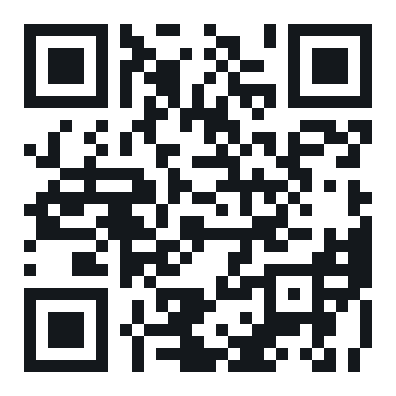
This code opens crashkit.app, where your customer can read what the app does and email for the Android install link — we reply with it. On an iPhone today it tells them there's no iPhone version yet, which is the honest state of things. Print it, put it in the folder, stick it on the counter.
One-page PDF for your GMTalk to us
Tell us your store, how many deliveries a month, and whether you want the pilot or just the QR code.
That's a real inbox, read by a person. There's no form to fill in and no sales sequence waiting for you — if you'd rather just take the QR code and try it, do that instead.